
I’ve heard so many good things about Kuretake Gansai Tambi Watercolors that I decided to try it. These are Japanese watercolors, marketed towards professional artists and crafters.
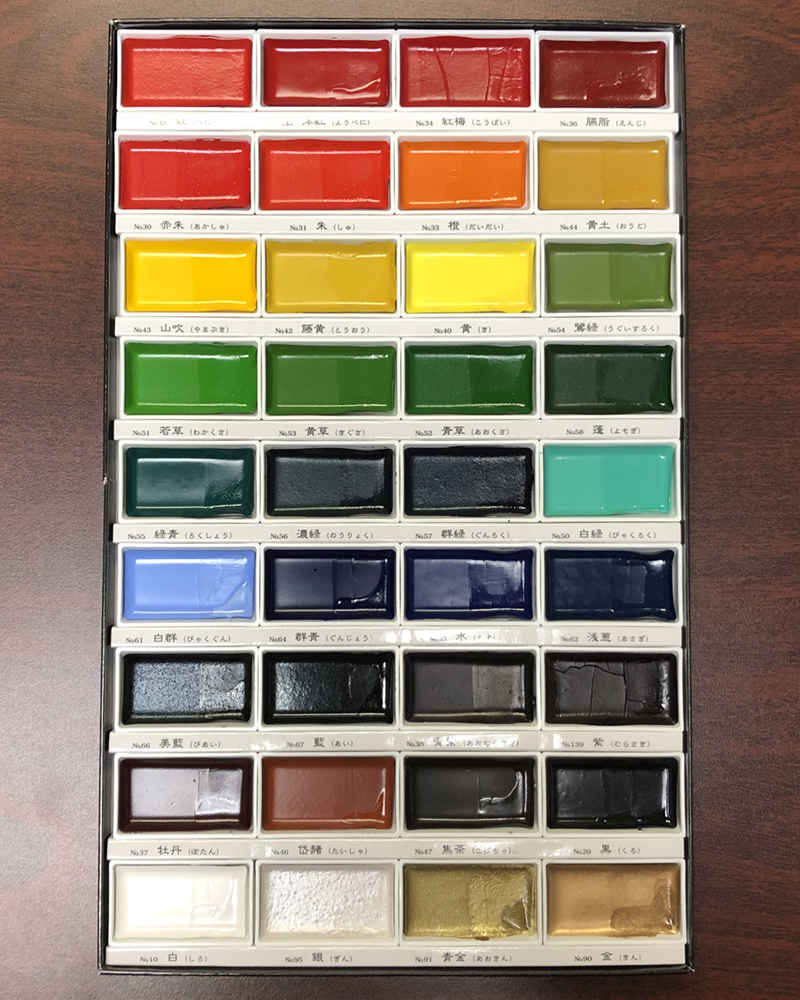
This watercolor set contains 36 colors:
No. 32: Beni べに・紅 [Red]
No. 35: Koubai こうばい・紅梅 [Carmine]
No. 34: Youbeni ようべに・洋紅 [Rose Madder]
No. 36: Enji えんじ・臙脂 [Rose Madder Deep]
No. 30: Akashu あかしゅ・赤朱 [Cadmium Red]
No. 31: Shu しゅ・朱 [Cadmium Scarlet]
No. 33: Daidai だいだい・橙 [Cadmium Orange]
No. 44: Oudo おうど・黄土 [Yellow Ochre]
No. 43: Yamabuki やまぶき・山吹 [Cadmium Yellow]
No. 42: Touou とうおう・籐黄 [Aureolin]
No. 40: Ki き・黄 [Lemon Yellow]
No. 54: Uguisuroku うぐいすろく・鶯緑 [Olive Green]
No. 51: Wakakusu わかくさ・若草 [Sap Green Light]
No. 53: Kigusa きぐさ・黄草 [Sap Green]
No. 52: Aokusa あおくさ・青草 [Hooker’s Green]
No. 58: Yomogi よもぎ・蓬 [Sap Green Deep]
No. 55: Rokusho ろくしょう・緑青 [Viridian]
No. 56: Nouryoku のうりょく・濃緑 [Forest Green]
No. 57: Gunroku ぐんろく・群緑 [Turquoise Green Deep]
No. 50: Byakuroku びゃくろく・百緑 [Malachite]
No. 61: Byakugun びゃくぐん・百群 [Ultramarine Pale]
No. 64: Gunjou ぐんじょう・群青 [Ultramarine]
No. 63: Mizu みず・水 [Cerulean Blue]
No. 62: Asagi あさぎ・浅葱 [Turquoise Blue]
No. 66: Biai びあい・美藍 [Prussian Blue]
No. 67: Ai あい・藍 [Indigo]
No. 38: Aomurasaki あおむらさき・青紫 [Imperial Violet]
No. 139: Murasaki むらさき・紫 [Cobalt Violet]
No. 37: Botan ぼたん・牡丹 [Purple]
No. 46: Taisha たいしゃ・岱謝 [Burnt Sienna]
No. 47: Kogecha こげちゃ・焦茶 [Raw Umber Deep]
No. 20: Kuro くろ・黒 [Black]
No. 10: Shiro しろ・白 [White]
No. 95: Gin ぎん・銀 [White Gold]
No. 91: Aokin あおきん・青金 [Bluish Gold]
No. 90: Kin きん・金 [Gold]
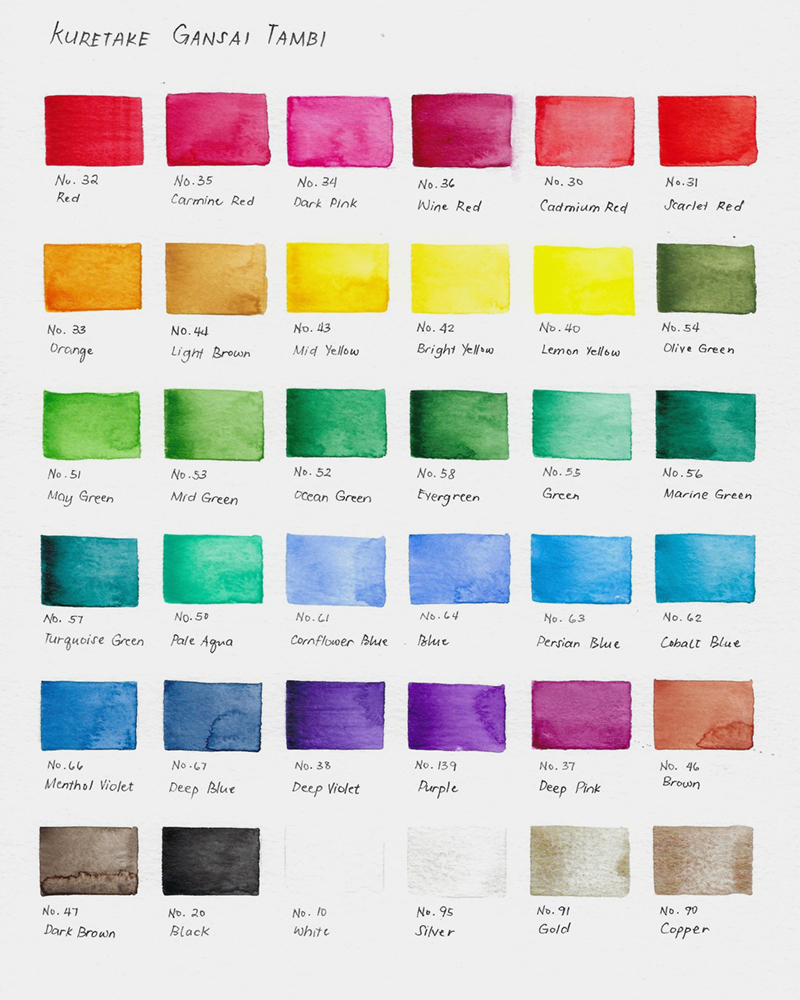
PRODUCT:
The paints activate easily, producing rich, vibrant colors with a smooth, creamy consistency. Not at all chalky or grainy. They can dry with a slightly shiny finish, especially when you apply thickly.
These are slightly different from most Western watercolors because they use a different binder. They are more opaque than traditional watercolors but not quite as opaque as gouache. Of course, they can be diluted to look more transparent.
They are very easy to blend and can be lifted very easily even after drying, which is great when you make a mistake, but it makes layering a little tricky because you might reactivate the bottom layer when you go over it.
I cannot attest to the lightfastness of these paints because I don’t know what pigments were actually used. I may have to do my own testing, and I’ll update this post when I do.
VALUE:
This set usually retails for $37.97, but you can definitely find one at a cheaper price on Amazon. At $37.97, each pan costs around $1.05. I paid $27.55 for mine via Amazon. That’s $0.76 per pan—what a steal!
PACKAGING:
The set comes packaged in a simple yet elegant green cardboard box, which reflects traditional minimalist Japanese aesthetic. The box itself is fairly large, so it makes a better studio set than a travel set.
The pans are much larger than typical watercolor pans, which a plus when you need to use larger brushes. Since they are hand-poured, they are not full to the brim, but they most likely contain the same amount of paint as a regular full pan.
OVERALL:
I’m very impressed with the quality, especially considering the price. I enjoyed how bold and brilliant the colors were. I especially love the metallic paints. I would recommend this whether you’re just starting out or experienced.
 Jen de Leon
Leave a comment